Home Modification Assessment OT: What It Looks At

The front step that has become difficult to manage, the shower ledge that no longer feels safe, or the kitchen bench that causes pain after ten minutes can change the shape of a person’s day. A home modification assessment OT looks beyond the building itself to understand how a person moves through their routines, what matters to them, and what practical changes could help them remain safe, confident and independent.
For some people, that may mean a simple grab rail positioned where it is genuinely useful. For others, it may involve a ramp, bathroom redesign, accessible entry, changes to a vehicle, or equipment that makes everyday tasks more manageable. The best solution is rarely about adding the most equipment. It is about creating a home that supports the person who lives there.
What is a home modification assessment OT?
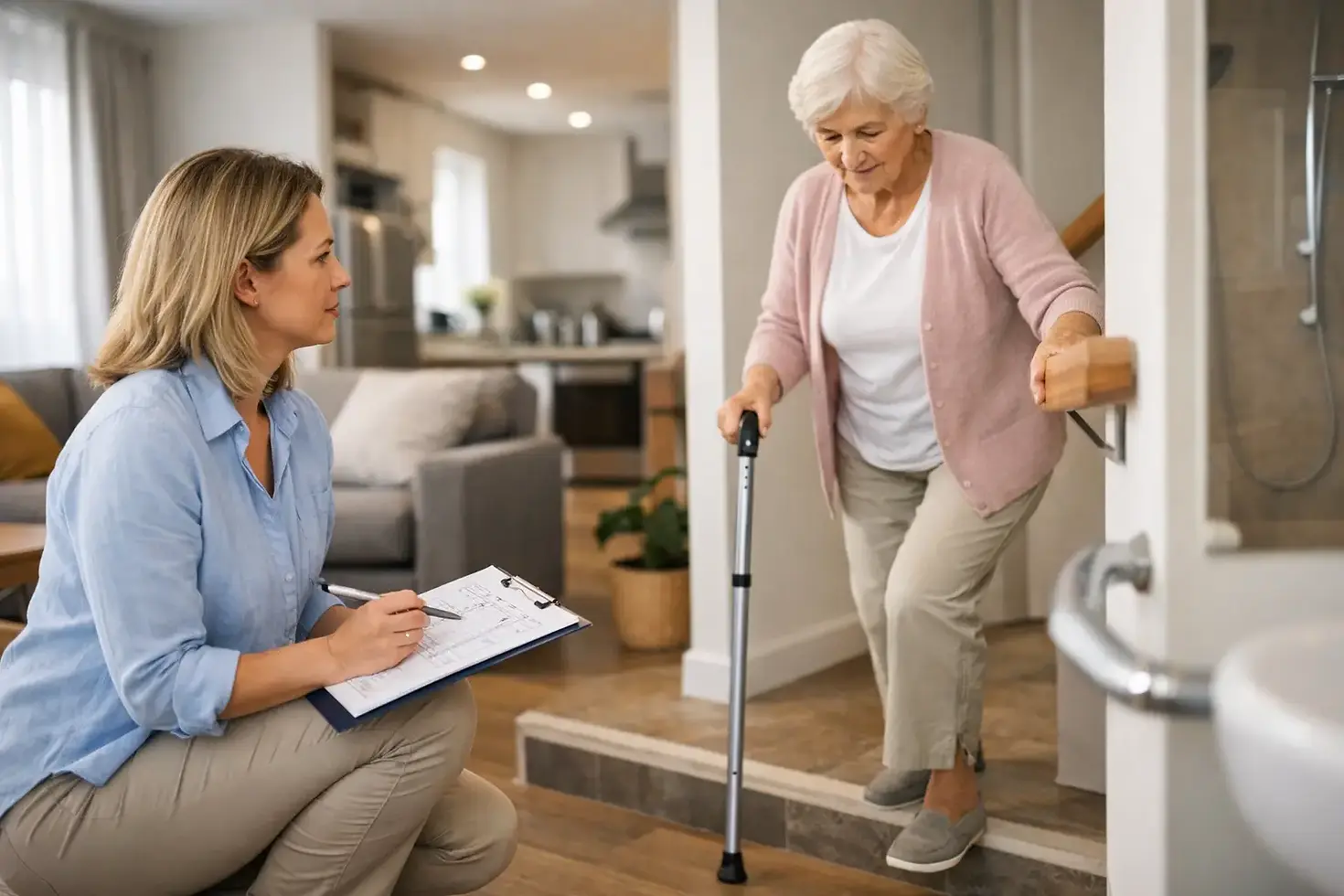
A home modification assessment is a detailed occupational therapy assessment of the relationship between a person, their activities and their environment. The occupational therapist visits the home where possible, because measurements and photographs alone cannot always show how someone transfers from bed, navigates a narrow hallway, prepares a meal, manages medication or gets safely to the letterbox.
The assessment focuses on ability, not disability. It considers existing strengths, preferred routines, physical capacity, balance, pain, vision, cognition, fatigue, sensory needs and the support already available. It also considers the home’s layout, including access from the street or driveway, thresholds, steps, floor surfaces, bathroom configuration, lighting, door widths and the space needed to use mobility equipment.
Just as importantly, an OT listens. A modification that looks sensible on a plan can be unhelpful if it does not suit the person’s habits, identity or goals. Someone may want to keep gardening, welcome family for lunch, move independently between rooms, continue cooking, or safely get into their ute for work. These goals shape the recommendations.
What happens during the assessment?
An assessment is not a pass-or-fail inspection of a home. It is a collaborative conversation and practical observation. The OT may ask a client to show how they currently manage key activities, at a pace that feels comfortable and safe. Family members, carers or support workers can be involved when the client wishes, as they often offer useful insight into daily patterns and emerging concerns.
The OT will usually explore areas such as entering and leaving the home, showering and toileting, dressing, preparing food, laundry, moving around inside and outside, and using any current aids. For NDIS participants and people with complex needs, the assessment may also consider transfers, pressure care, powered mobility, hoist access, support-worker safety and future changes in function.
Measurements are taken carefully. This may include the height of steps and chairs, gradients, circulation space, shower dimensions and the location of structural elements. The OT may also consider whether a proposed change needs input from a builder, building designer, engineer or other specialist. Good recommendations are both clinically appropriate and realistic for the property.
The difference between equipment and modifications
Equipment and home modifications often work together, but they are not the same thing. Equipment may include a shower chair, over-toilet aid, four-wheel walker, bed pole, scooter or transfer device. A modification is a permanent or semi-permanent change to the environment, such as grab rails, a handrail, ramp, widened doorway, level-access shower or altered kitchen layout.
Sometimes equipment is the right first step. It may provide an immediate, lower-cost solution while a person recovers from injury or waits for larger works. In other situations, equipment alone creates new problems. A shower chair may not be safe in a cramped shower, and a portable ramp may be unsuitable where the gradient is too steep or where regular access is needed in wet weather.
An OT weighs these trade-offs with the client. The aim is not to make a home feel clinical or to change more than necessary. It is to find the option that supports daily life now while accounting for likely future needs.
Recommendations that work in real life
A useful report explains not only what is recommended, but why. It links each recommendation to a functional goal and the risks or barriers identified during assessment. For example, a handrail may support safer access to the backyard washing line; improved lighting may help someone who is unsteady at night; a level entry may allow a person using a wheelchair or walker to leave home without relying on another person.
Recommendations may include:
grab rails and handrails positioned for individual transfer and mobility needs
ramps, threshold changes or accessible paths from parking to the front door
bathroom changes such as a level-access shower, shower screen removal or adjusted fittings
kitchen, laundry and bedroom changes that reduce bending, reaching and unsafe transfers
appropriate mobility, transfer or personal-care equipment alongside environmental changes
The report may also identify strategies that do not involve building work. Reorganising frequently used items, changing furniture placement, improving contrast or lighting, and practising safer task methods can make a meaningful difference. These options can be particularly helpful where the home is rented, funding is limited, or a larger renovation is not yet appropriate.
When bigger changes need careful planning
Major modifications can be life-changing, but they need thoughtful planning. A ramp that technically meets a measurement requirement may still create an awkward route through a garden. A bathroom renovation may require temporary arrangements while work is completed. Widening a doorway may affect wall structure, plumbing or the use of adjoining rooms.
For this reason, complex modifications often involve a team. The OT provides the functional rationale and specifications based on the client’s needs. Builders and tradespeople advise on construction methods and costs, while other professionals may be needed for building design or engineering requirements. Clear communication reduces the risk of work being completed in a way that does not meet the client’s needs.
Timing matters too. A person with a progressive condition may benefit from planning ahead rather than waiting for a crisis. Conversely, a person recovering after surgery or injury may need a temporary approach while their function changes. An experienced OT can help distinguish between what is needed immediately, what can wait, and what should be designed with the future in mind.
Funding and referral pathways
Home modification assessments may be relevant for NDIS participants, older people receiving home support, and private clients. The available funding pathway, approval process and documentation requirements vary, so it is helpful to seek assessment early, particularly where structural work may be needed.
For NDIS participants, recommendations need to relate clearly to functional needs and disability-related goals. For older Australians seeking to remain at home, assessment can help identify practical changes that support safer routines and reduce reliance on others. Private clients may seek advice following injury, a change in mobility, discharge from hospital, or when planning renovations that will support long-term access.
Katt McDonald OT provides mobile assessment across the Northern Rivers and telehealth support where appropriate. Telehealth can assist with early discussion, review of plans or equipment advice, although an in-home visit is often the best option when detailed measurements, transfers or complex structural modifications need to be considered.
Choosing changes that protect independence
The most valuable modification is not necessarily the most visible one. It is the change that lets someone shower with greater privacy, make a cup of tea without fear of falling, leave home to see friends, or continue a valued role at work and in the community.
A considered assessment gives clients and families a clearer path forward. Rather than making hurried decisions after a near fall or hospital admission, they can make choices that respect the person’s priorities, suit the home, and support independence in the ways that matter most.


Comments